
Industry
Natural Gas

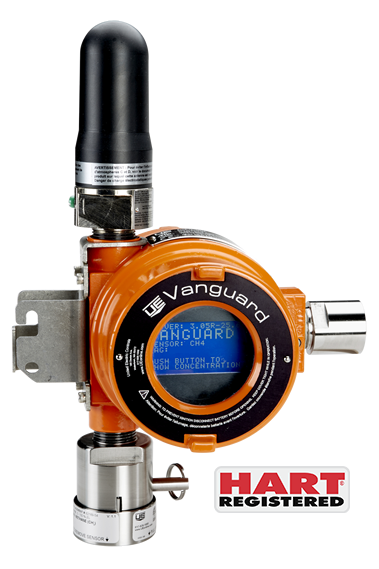



A natural gas exploration and production company had many of their well production sites operating under a skeletal crew or were unmanned. Many of these sites were also located far from where the control center was situated. The company was looking for an efficient method to continuously monitor the health of their gas separation assets, especially prone-to-leak segments such as connecting flanges and valves.
One particular well site had open path gas detectors deployed but there were still some gaps in gas detection coverage around leak prone assets. Deploying additional wired fixed point gas detectors would augment this coverage, but it would be a very costly and time consuming operation to run additional conduit for power and signal at this remote facility. Design work, trenching, testing and documenting of new conduit runs could also negatively affect other project schedules. A rapid and cost efficient solution to monitor and remotely communicate fugitive methane emissions – specifically at gas separation units within the site – was needed.
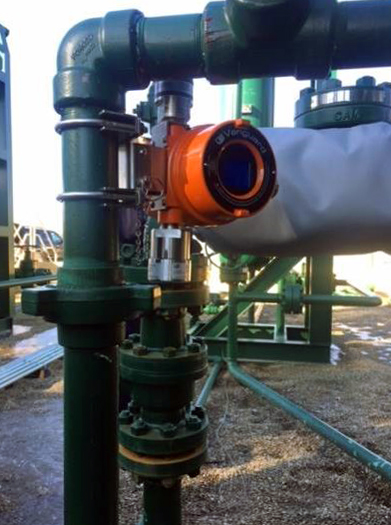
The chosen solution involved strategically mounting Vanguard WirelessHART gas detectors around the identified leak-prone areas of the separation unit, creating a continuous detection envelop. As the user already had a WirelessHart® network established onsite through the ROC800 Remote Terminal Unit (RTU), the network of gas detectors was setup within a day. Instant monitoring points were established without having to lay additional cables.
As a test, a controlled release of natural gas from a valve was detected accurately by a neighboring Vanguard detector within 30 seconds. The ambient gas concentration data would be conveyed via the WirelessHART network to the ROC 800 RTU, which would subsequently transmit the information to the central control center via cellular network. Any abnormal readings sensed by the gas detectors would trigger the dispatch of a maintenance team for an on-site inspection. Over time, the data collected by these detectors facilitated the proactive identification of potential issues, such as loosening connections and developing cracks in the pipes.


Pricing, delivery, returns, repairs or replacement questions.

Application, specification or custom solution questions.
Business hours are M-F, 8-4:30 EST.
We strive to respond in less than 24 hours.
Contact us at +1 617 923 6977 for immediate assistance.
United Electric Controls will not send you unwanted email or provide your email address to third parties
Business hours are M-F, 8-4:30 EST.
We strive to respond in less than 24 hours.
Contact us at +1 617 923 6977 for immediate assistance.
United Electric Controls will not send you unwanted email or provide your email address to third parties