
Industry
Midstream Oil & Gas

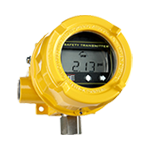


 Pump stations are critical for maintaining stable flow in midstream pipelines. A major oil company required a process transmitter for final element control to monitor seal cavity pressure and prevent cavitation-related failures. The application needed to meet API Plan 66A requirements, which call for detecting pressure buildup behind the mechanical seal.
The operator’s challenge was to reliably detect excessive seal leakage and overpressure events without adding system complexity. Traditionally, achieving API Plan 66A compliance required wiring the transmitter to a PLC and programming logic to trigger alarms, consuming additional engineering time and budget and requiring controls expertise.
The major oil company selected the ONE Series Safety Transmitter (2SLP48) with Safety Relay Output (SRO) — the industry’s first and only SIL-rated pressure transmitter with an integrated relay. The 2SLP48 is compliant with API Plan 66A and provides self-contained pump seal monitoring.
With the ONE Series installed, normal seal leakage drains through the restriction bushing, while excessive pressure buildup triggers the integrated relay initiating an alarm signal and automatically shutting down the pump — all without requiring PLC programming.


Pricing, delivery, returns, repairs or replacement questions.

Application, specification or custom solution questions.
Business hours are M-F, 8-4:30 EST.
We strive to respond in less than 24 hours.
Contact us at +1 617 923 6977 for immediate assistance.
United Electric Controls will not send you unwanted email or provide your email address to third parties
Business hours are M-F, 8-4:30 EST.
We strive to respond in less than 24 hours.
Contact us at +1 617 923 6977 for immediate assistance.
United Electric Controls will not send you unwanted email or provide your email address to third parties