
Boiler maintenance using electronic switches
Boilers are a critical asset in many commercial and industrial facilities (e.g., factories, refineries, power generation plants) and play a vital role in many industrial and production processes.
Unexpected issues arising with boilers can cause significant disruptions to a plant’s operations, leading to unplanned downtime. Facilities who have wisely chosen to implement robust boiler upgrade and maintenance programs have witnessed improvements in their overall process uptime.
In many cases, boiler system upgrades consist of replacing mechanical switches and gauges with advanced electronic instrumentation (e.g., transmitters). However, these upgrades often come with hefty price tags, and sometimes a costly smart transmitter can be an overkill for a simple boiler pressure or temperature control application. Users are simply looking for affordable instrumentation that gets the job done and is simple to install, maintain and operate. This ‘technology gap’ has resulted in the demand for an emerging class of affordable instrumentation called electronic switches.
Electronic Switches
Electronic switches (e.g., pressure and temperature) combine the benefits of a mechanical switch (e.g., simplicity) and a smart transmitter (e.g., device diagnostics). Some electronic switches are even designed to operate using the same 2 wires (power and signal cables to PLCs/DCS) as your mechanical instrumentation. This eliminates the need for additional wiring infrastructure, creating an ideal drop-in-upgrade solution. Electronic switches are typically less than half the cost of smart transmitters.
Electronic switches can create a higher level of maintenance efficiency for boiler operators. From a maintenance standpoint, operators can spend up to 12 hours per year per mechanical switch just to calibrate, test and install a switch. If an electronic switch is used instead, this maintenance time can be significantly reduced to 30 minutes per year.
For instance, a critical boiler maintenance practice is the regular upkeep of the boiler fuel system. An efficient fuel system ensures that fuel is not wasted, optimizing fuel costs. Another example is the water treatment system in the boiler which requires routine maintenance, failure which would cause the unnecessary buildup of impurities resulting in boiler inefficiency. In these two examples, older boiler systems are fitted with mechanical switches that can only trigger alarms when the pressure in the fuel system or water filter is abnormal. In addition, there is also no way of confirming onsite if the switch is functioning as intended to be.
When electronic switches are deployed in place of the mechanical instrumentation, the user can now monitor the device and process health data derived from the embedded diagnostics. Alarm and reset levels can also be programmed onsite with precision settings that are four times more accurate than a mechanical switch. Boiler fuel and water treatment systems can now be fine-tuned to an optimal arrangement.
Here is an example of how electronic switches has created maintenance efficiency for a customer who operates several gas-fired boilers in their facility.
Case Study
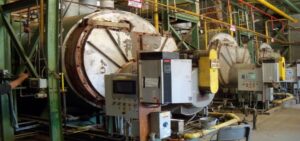
The customer was previously using mechanical switches to trigger the high and low pressure alarm and shutdown systems on their boilers.
Challenges:
- Firstly, mechanical switches did not provide the level of field settings adjustability the customer would have liked to have. Each time they needed to calibrate the device, the maintenance personnel would have to bring it back to the instrument shop and bench test the device. This was wasted time that could have been avoided.
Secondly, during the maintenance inspection rounds it was difficult for the maintenance personnel to tell if the switches on the boilers were functioning as intended. Some of the mechanical instrumentation were installed high up on the boilers in hard-to-reach areas and there was always the concern that it would fail unexpectedly.
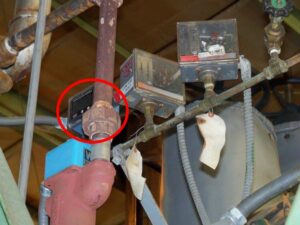
- Thirdly, the mechanical switch settings experienced temperature drifts over time. This meant that the switches had to be brought into the shop for mechanical recalibration more often than necessary.
Results:
Upgrading the boiler system instrumentation with electronic switches enabled the customer to achieve maintenance efficiency by:
- Programming the set and reset points of the electronic switch onsite without the hassle of bringing it back to the instrument shop to test and calibrate
- Data logging the process and device health, ensuring that the instrumentation was still functioning. Error codes published on the electronic switch display provides an indication of what the issue is and where it lies so that the right maintenance action can be administered, quickly.
- Achieving more reliable switch performance with an electronic-based design. Better device reliability translates to reduced device maintenance.
Mechanical switches and instrumentation still have their place in boiler maintenance. However, with a new class of electronic switches fulfilling the majority needs for a boiler operator, all at an economical cost, the value of maintenance efficiency is now redefined.
Please contact us for further information or discussion.
Email: marketing@ueonline.com


