
Industry
Refining

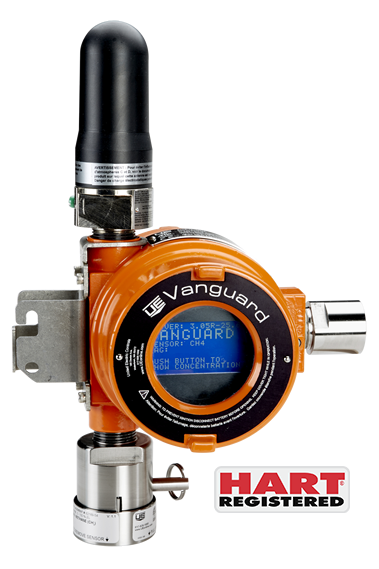


 A North American refinery needed a more efficient way to detect hazardous gases – specifically hydrogen sulfide (H2S) and methane (CH4) – within its analyzer buildings. These buildings house sensitive equipment that samples process media flowing through the refinery’s pipe network. To reduce chances of exposure, refinery workers rely on personal gas monitors while inside the analyzer buildings. However, the customer sought a proactive solution: fixed-point gas detectors to alert workers of gas presence before entering these confined spaces.
The complication? Installing traditional wired gas detection systems was impractical and costly. The analyzer buildings are remote from the control center, making it expensive to run conduit and cabling for new detection points.
Instead of opting for wired detectors, the refinery installed Vanguard WirelessHART-enabled gas detectors, creating immediate, cost-effective monitoring points, taking advantage of the existing WirelessHART® network, with a gateway just 100 feet from the analyzer building.
Within a day, the Vanguard devices integrated seamlessly into the existing WirelessHART mesh network, delivering real-time data on H2S and CH4 levels back to the control center. A wired system would have take weeks. This allowed operators to remotely assess hazardous gas concentrations before entering the building.
Wireless deployment also enabled strategic detector placement. Without wiring limitations, the Vanguards were mounted close to pipe flanges – areas most prone to leaks – maximizing detection effectiveness.
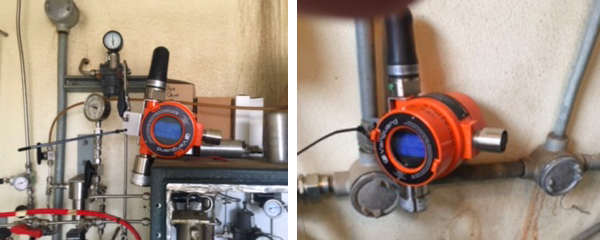 CH4 (left) and H2S (right) monitoring

Pricing, delivery, returns, repairs or replacement questions.

Application, specification or custom solution questions.
Business hours are M-F, 8-4:30 EST.
We strive to respond in less than 24 hours.
Contact us at +1 617 923 6977 for immediate assistance.
United Electric Controls will not send you unwanted email or provide your email address to third parties
Business hours are M-F, 8-4:30 EST.
We strive to respond in less than 24 hours.
Contact us at +1 617 923 6977 for immediate assistance.
United Electric Controls will not send you unwanted email or provide your email address to third parties